
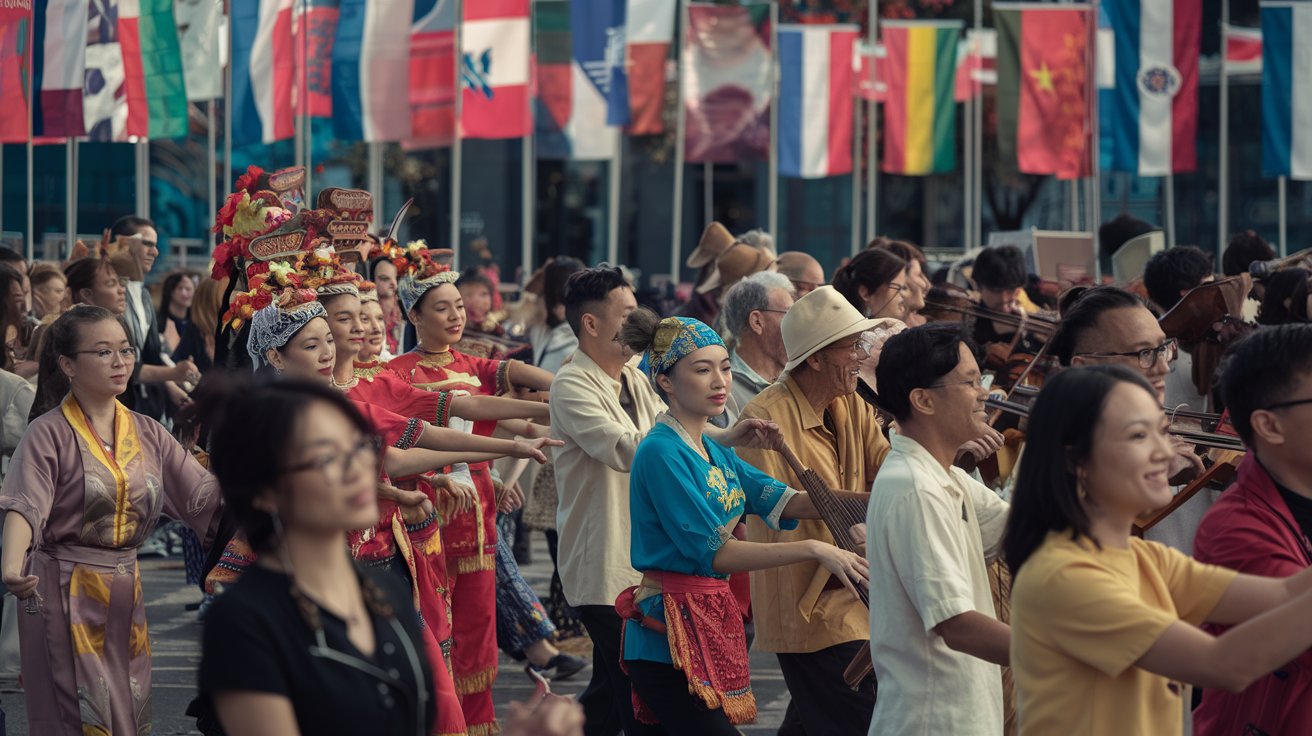
Asian Heritage Month in Canada is celebrated every May to recognize the contributions and achievements of Asian Canadians throughout history. Established in 2002, this month-long celebration honors the diverse cultures, traditions, and communities from East Asia, Southeast Asia, South Asia, and the Pacific Islands. For Americans interested in understanding Canadian diversity or connecting with Asian heritage initiatives, this observance offers educational resources, virtual events, and cross-border cultural exchanges that enrich North American communities.
Asian Heritage Month in Canada: Origins and Significance
Asian Heritage Month became officially recognized in Canada on May 30, 2002, through a unanimous vote in the Senate. This designation acknowledges the historical contributions of Asian Canadians dating back to the 1800s, when Chinese laborers built the Canadian Pacific Railway and Japanese immigrants established farming communities in British Columbia. The month celebrates over 7.5 million Canadians of Asian descent, representing approximately 19% of Canada’s population according to 2021 census data. The significance extends beyond Canadian borders, with American communities near the border and Asian American organizations frequently participating in joint celebrations and educational initiatives.
The observance addresses historical injustices faced by Asian communities in Canada, including the Chinese Head Tax, Japanese internment during World War II, and various exclusion acts. By dedicating May to Asian heritage, Canada acknowledges these struggles while celebrating resilience, cultural richness, and ongoing contributions to Canadian society. For American audiences, understanding this history provides valuable context for North American Asian diaspora experiences and shared advocacy for equity.
What Is the Theme for Asian Heritage Month in Canada 2026?
The 2026 Asian Heritage Month theme focuses on “Generations of Resilience: Building Tomorrow Together,” emphasizing intergenerational knowledge transfer and youth leadership within Asian Canadian communities. This theme was announced by Canadian Heritage in February 2026 and highlights how younger generations honor ancestral traditions while innovating for future challenges. The theme particularly resonates with second and third-generation Asian Canadians who navigate dual cultural identities while contributing to Canadian innovation, arts, sciences, and public service.
Previous themes have included “Recognizing Our Past, Embracing Our Future” (2025) and “Many Voices, Many Stories” (2024). The 2026 theme addresses contemporary issues including mental health awareness in Asian communities, economic empowerment, climate action leadership, and combating anti-Asian racism. American organizations and educational institutions can align their programming with this theme through virtual exchanges, documentary screenings, and collaborative research projects examining Asian diaspora experiences across North America.
Why Is Asian Heritage Month Celebrated in May?
May was chosen for Asian Heritage Month for several historically significant reasons that connect Canadian and broader North American Asian experiences. First, May 7, 1886, marked when Sir John A. Macdonald introduced legislation that restricted Chinese immigration through discriminatory head taxes. Acknowledging May creates opportunities to educate about this dark period while celebrating how Asian communities persevered despite legal and social barriers. Second, May coincides with several important Asian cultural celebrations, including Vesak (Buddha’s Birthday), which many Buddhist communities across Canada and the United States observe.
The timing also aligns with the completion of the Canadian Pacific Railway in 1885, where over 15,000 Chinese workers contributed essential labor under dangerous conditions. Many died during construction, yet their contributions went unrecognized for decades. Additionally, May provides ideal timing for schools to incorporate heritage education before summer break, allowing students in both Canada and border communities in states like Washington, New York, and Vermont to participate in cultural learning activities and virtual classroom exchanges.
Are Filipinos Part of Asian Heritage Month?
Filipinos are absolutely included in Asian Heritage Month celebrations in Canada. Filipino Canadians represent one of the largest and fastest-growing Asian communities in Canada, with over 950,000 people of Filipino descent according to 2021 census data. This makes them the fourth largest ethnic group in Canada and the largest Southeast Asian community. Filipino contributions span healthcare, education, technology, arts, and public service, with Filipino Canadians playing essential roles during the COVID-19 pandemic as frontline healthcare workers.
The inclusion of Filipinos in Asian Heritage Month recognizes their unique historical journey, including waves of immigration beginning in the 1960s and the establishment of vibrant Filipino communities in cities like Toronto, Vancouver, Calgary, and Winnipeg. Filipino cultural celebrations during May include traditional dance performances, culinary festivals showcasing adobo and pancit, and educational programs about Philippine history and languages. For Americans, understanding Filipino inclusion provides context for the interconnected Filipino diaspora experience across North America, with similar communities thriving in California, Hawaii, Illinois, and New Jersey.
South Asian Heritage Month Canada: Understanding the Distinction
Canada also recognizes South Asian Heritage Month separately, celebrated each May alongside Asian Heritage Month. This dual recognition acknowledges the distinct histories, cultures, and contributions of South Asian communities, including those with roots in India, Pakistan, Bangladesh, Sri Lanka, Nepal, Bhutan, Afghanistan, and the Maldives. South Asian Canadians number over 2.6 million, representing significant population growth and cultural influence across Canadian provinces.
While both observances occur in May, they feature different programming and themes that respect cultural specificity. South Asian Heritage Month highlights contributions like Jagmeet Singh’s political leadership, technological innovations from South Asian entrepreneurs, and cultural expressions through Bollywood cinema, classical music, and traditional dance forms. The separate designation ensures adequate recognition without conflating diverse Asian experiences under a single umbrella, providing more nuanced educational opportunities for American students and organizations studying Canadian diversity initiatives.
Asian Heritage Month Canada Resources for Education
Asian Heritage Month Canada resources provide comprehensive educational materials accessible to American educators, students, and community organizations. Canadian Heritage maintains a digital resource library featuring lesson plans, historical timelines, biographical profiles, and downloadable activity guides suitable for K-12 education. These materials cover topics including the Chinese Head Tax, Japanese Canadian internment, Korean War veterans, Vietnamese refugee experiences, and contemporary Asian Canadian achievements in science, arts, and public service.
Libraries across Canada offer curated reading lists featuring Asian Canadian authors like Kim Thúy, Madeleine Thien, and Kevin Kwan, with many titles available through American library systems and digital platforms. The National Film Board of Canada provides free streaming of documentaries examining Asian Canadian experiences, including “Ninth Floor” about Caribbean and Asian student activism and “Wavemakers” profiling Asian Canadian changemakers. Museums like the Chinese Canadian Museum in Vancouver and the Aga Khan Museum in Toronto offer virtual exhibitions and educational programs accessible to American audiences through online platforms.
Asian Heritage Month Canada for Kids: Engaging Young Learners
Asian Heritage Month activities for kids combine cultural education with interactive experiences that work equally well in Canadian and American classroom settings. Elementary-level resources include virtual field trips to Asian cultural centers, animated history lessons about Asian Canadian pioneers, and hands-on craft activities like Chinese calligraphy, Japanese origami, Korean hanbok paper dolls, and Vietnamese lantern making. These activities introduce children to Asian cultural traditions while developing fine motor skills and artistic expression.
Age-appropriate books for young readers include “The Paper Bag Princess” by Robert Munsch (illustrated by Michael Martchenko), “Mustache Baby” by Bridget Heos featuring Asian family representation, and “The Name Jar” by Yangsook Choi exploring Korean Canadian identity. Digital platforms offer interactive games teaching basic phrases in Mandarin, Cantonese, Tagalog, Hindi, and other Asian languages. Many Canadian educational resources align with Common Core standards used in American schools, making cross-border curriculum integration seamless for teachers in border states.
Asian Heritage Day Celebrations and Events
While Asian Heritage Month spans all of May, many communities designate specific days for concentrated celebrations. Major Canadian cities host Asian Heritage Day festivals featuring cultural performances, food vendors, martial arts demonstrations, and family activities. Toronto’s Asian Heritage Month Festival typically draws over 50,000 attendees, with virtual components allowing American participants to join livestreamed performances and workshops. Vancouver’s Chinatown Spring Festival, Richmond Night Market opening, and Calgary’s Asian Heritage Street Festival represent major annual events that welcome international visitors.
These celebrations showcase diverse Asian cultural expressions including Chinese lion dances, Bollywood dance performances, Filipino tinikling, Japanese taiko drumming, Thai classical dance, and Korean K-pop dance covers. Food is central to celebrations, with vendors offering authentic cuisine from dozens of Asian countries. For Americans interested in attending, many events occur near border cities, and major metropolitan areas like Seattle, Detroit, and Buffalo host coordinating celebrations that honor the shared Asian heritage experience across North America.
Why Is May Asian Heritage Month: Historical Context
Understanding why May was selected for Asian Heritage Month requires examining both commemorative and practical considerations. Beyond the railway completion and immigration legislation dates, May represents a period of renewal and growth that metaphorically reflects Asian Canadian community development. Spring’s symbolism resonates with many Asian cultures, where renewal festivals and agricultural traditions mark this season. The month also avoids conflicts with other major heritage months, allowing focused attention on Asian contributions and experiences.
The parliamentary process that established May as Asian Heritage Month involved extensive consultation with Asian Canadian community leaders, historical societies, and advocacy organizations. Senator Vivienne Poy, the first Canadian senator of Asian descent, championed the legislation after years of grassroots advocacy. Her leadership demonstrated how political representation enables cultural recognition. For American audiences studying heritage month initiatives, Canada’s approach offers insights into successful legislative processes for cultural recognition, informing similar efforts at state and federal levels in the United States.
Is There a Canadian Heritage Month? Understanding Canada’s Diversity Calendar
Canada recognizes multiple heritage months throughout the year, reflecting the country’s commitment to multicultural recognition and celebration. Beyond Asian Heritage Month and South Asian Heritage Month in May, Canada observes Black History Month in February, National Indigenous History Month in June, Italian Heritage Month in June, Hispanic Heritage Month in October, and Islamic Heritage Month in October. This comprehensive calendar ensures diverse communities receive dedicated recognition and educational focus throughout the year.
Each Canadian heritage month receives federal support through Canadian Heritage, the government department responsible for cultural promotion. Funding supports community events, educational resource development, media campaigns, and institutional programming. This model differs from the United States, where heritage months receive presidential proclamations but varying levels of federal resource allocation. Americans studying multicultural policy can examine Canada’s structured approach as a comparative model, particularly regarding resource distribution, community engagement strategies, and assessment of heritage month effectiveness in promoting intercultural understanding.
Asian Heritage Month 2026: Cross-Border Participation Opportunities
Asian Heritage Month 2026 offers numerous opportunities for American participation in Canadian celebrations and collaborative programming. Virtual events enable Americans to attend panel discussions, cultural performances, and educational webinars hosted by Canadian institutions. Universities along the border, including University of Washington, University of Vermont, and Wayne State University, partner with Canadian counterparts for joint symposia examining Asian diaspora experiences across North America.
Professional organizations like the Asian Pacific American Bar Association and Asian American Journalists Association coordinate with Canadian equivalents for knowledge exchange programs during May. Cultural institutions including the Wing Luke Museum in Seattle and the Museum of Chinese in America in New York collaborate with Canadian museums for traveling exhibitions and digital content sharing. These partnerships strengthen transnational Asian community connections while providing Americans deeper understanding of shared histories, parallel challenges, and opportunities for solidarity across borders.
Combating Anti-Asian Racism During Heritage Month
Asian Heritage Month serves as a crucial platform for addressing anti-Asian racism, which increased dramatically in both Canada and the United States following the COVID-19 pandemic. Statistics Canada reported a 301% increase in hate crimes targeting Asian Canadians between 2019 and 2021, with similar trends documented by the FBI in the United States. Heritage Month programming increasingly incorporates education about stereotypes, microaggressions, and systemic discrimination affecting Asian communities.
Initiatives during May 2026 include bystander intervention training, community safety workshops, anti-racism coalition building, and advocacy for policy changes addressing hate crimes. Organizations like the Chinese Canadian National Council and the National Association of Japanese Canadians lead educational campaigns that resonate with American groups fighting similar battles. For Americans, understanding Canadian approaches to combating anti-Asian racism provides alternative strategies, policy models, and solidarity frameworks that strengthen cross-border advocacy efforts protecting Asian communities throughout North America.
Related video about asian heritage month canada
This video complements the article information with a practical visual demonstration.
Essential Q&A about asian heritage month canada
What is the theme for Asian Heritage Month in Canada 2026?
The 2026 Asian Heritage Month theme is “Generations of Resilience: Building Tomorrow Together,” announced by Canadian Heritage in February 2026. This theme emphasizes intergenerational knowledge transfer, youth leadership within Asian Canadian communities, and how younger generations honor ancestral traditions while innovating for contemporary challenges. The theme addresses mental health awareness, economic empowerment, climate action, and combating anti-Asian racism, providing a framework for events and educational programming throughout May 2026 across Canada.
Why is Asian Heritage Month celebrated in May in Canada?
May was chosen for Asian Heritage Month because of several historically significant dates, including May 7, 1886, when discriminatory Chinese immigration legislation was introduced, and the 1885 completion of the Canadian Pacific Railway built largely by Chinese laborers. May also coincides with important Asian cultural celebrations like Vesak (Buddha’s Birthday) and provides ideal timing for schools to incorporate heritage education before summer break. The month symbolizes renewal and growth while allowing focused attention on Asian Canadian contributions without conflicting with other heritage observances throughout the year.
Are Filipinos included in Asian Heritage Month in Canada?
Yes, Filipinos are absolutely included in Asian Heritage Month celebrations. Filipino Canadians represent one of the largest Asian communities in Canada, with over 950,000 people of Filipino descent according to 2021 census data, making them the fourth largest ethnic group and the largest Southeast Asian community. Filipino contributions span healthcare, education, technology, and arts, with significant representation as frontline workers during the COVID-19 pandemic. May programming includes Filipino cultural celebrations, traditional dance performances, culinary festivals, and educational programs about Philippine history and languages throughout Canadian cities.
How can Americans participate in Asian Heritage Month Canada activities?
Americans can participate through virtual events including livestreamed cultural performances, panel discussions, and educational webinars hosted by Canadian institutions. Universities near the border coordinate joint symposia examining Asian diaspora experiences, while professional organizations partner for knowledge exchange programs. Cultural institutions collaborate on traveling exhibitions and digital content sharing. Americans can also access Canadian Heritage’s online resources, watch National Film Board documentaries, attend coordinating celebrations in border cities, and engage with Canadian Asian community organizations through social media platforms throughout May.
What is the difference between Asian Heritage Month and South Asian Heritage Month in Canada?
Canada recognizes both Asian Heritage Month and South Asian Heritage Month separately in May to honor distinct histories and cultures. Asian Heritage Month encompasses communities from East Asia, Southeast Asia, and the Pacific Islands, while South Asian Heritage Month specifically recognizes communities with roots in India, Pakistan, Bangladesh, Sri Lanka, Nepal, Bhutan, Afghanistan, and the Maldives. This dual recognition ensures adequate representation without conflating diverse experiences, providing more nuanced educational opportunities and allowing each community to highlight specific contributions, cultural expressions, and historical narratives during dedicated programming.
Where can educators find Asian Heritage Month Canada resources for classroom use?
Educators can access comprehensive Asian Heritage Month resources through Canadian Heritage’s digital library, which offers lesson plans, historical timelines, biographical profiles, and downloadable activity guides for K-12 education. The National Film Board of Canada provides free documentary streaming, while libraries maintain curated reading lists featuring Asian Canadian authors. Museums like the Chinese Canadian Museum and Aga Khan Museum offer virtual exhibitions accessible internationally. Many resources align with Common Core standards used in American schools, making cross-border curriculum integration seamless. Resources cover topics from historical injustices to contemporary Asian Canadian achievements across multiple disciplines.
| Key Aspect | Important Details | Benefit for American Audiences |
|---|---|---|
| Official Recognition | Established May 2002, celebrates 7.5+ million Asian Canadians (19% of population) | Provides model for heritage month implementation and multicultural policy development |
| 2026 Theme | “Generations of Resilience: Building Tomorrow Together” focusing on youth leadership | Aligns programming for cross-border collaborations and shared educational initiatives |
| Filipino Inclusion | 950,000+ Filipino Canadians, fourth largest ethnic group and largest Southeast Asian community | Strengthens understanding of Filipino diaspora experiences across North America |
| Educational Resources | Canadian Heritage digital library, NFB documentaries, museum virtual exhibitions | Free accessible materials for American educators aligned with Common Core standards |
| Virtual Participation | Livestreamed events, webinars, university partnerships, cross-border cultural exchanges | Enables American engagement without travel, building transnational community connections |
| Anti-Racism Focus | Addresses 301% increase in hate crimes, bystander training, policy advocacy | Shares strategies and solidarity frameworks for protecting Asian communities across borders |